Alexander McQueen built a reputation on shock. His shows could be dark, strange, and deliberately uncomfortable. Yet the alexander mcqueen designer story is really about something quieter: tailoring of exceptional skill. The theater only worked because the craft underneath it was real.
That tension is the key to reading his work. The spectacle drew the headlines. The cuts, the shapes, the command of fabric drew the respect. Strip away the drama and you still find some of the most precise tailoring of his generation.
This guide walks through both sides. It explains where the skill came from, why the shows looked the way they did, and what the balance between art and craft means for anyone watching fashion today.
Who was Alexander McQueen, and where did the skill come from?
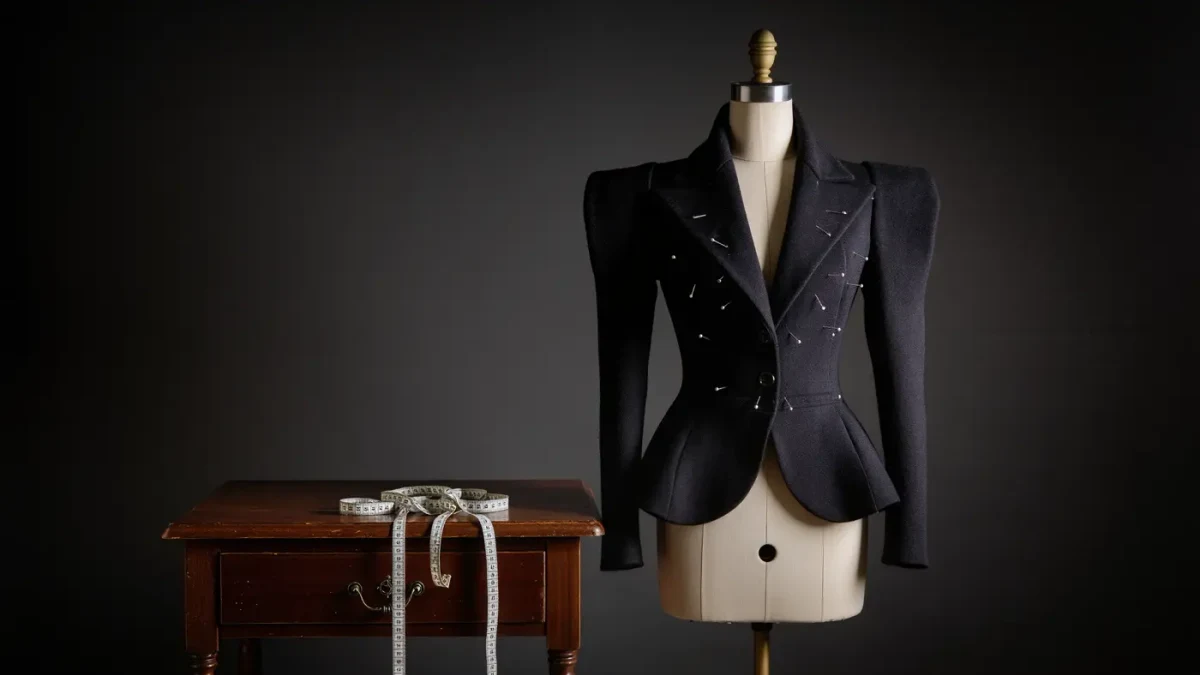
Lee Alexander McQueen grew up in London and trained as a tailor on Savile Row, the street famous for made-to-measure menswear. That apprenticeship taught him how a jacket is built: the canvas inside, the shoulder line, the way cloth falls from a collar. He later studied fashion design at a London art school, adding ideas to a hand that already knew the work.
The result was unusual. Many designers learn concepts first and craft later. McQueen learned craft first. When he cut a low, scooped trouser waist that became one of his signatures, it was not a gimmick. It was a pattern-maker's joke told with total control.
That grounding explains why his clothes still read as well-made, not just dramatic. A McQueen jacket holds its shape. A dress follows the body with intent. The shock was the surface. The suit was the substance.
Why were his runway shows so theatrical?
McQueen treated the runway as a stage, not a conveyor belt. His shows had narrative frames, strange materials, and staging meant to provoke. Some moments were beautiful. Some were deliberately hard to watch. He wanted a reaction, and he understood that fashion could get one the way cinema or performance art does.
The read: this was a strategy as much as a temperament. A young, independent designer with no advertising budget needed attention. A show people could not stop discussing was the cheapest marketing there is. The theater built the name; the tailoring kept it from collapsing into novelty.
It is worth separating the two impulses. Plenty of designers stage spectacle. Few could back it with a finished garment that justified a second look. McQueen's shows worked because the audience left talking about the drama and then, quietly, wanting the coat.
What made the tailoring so respected?
Three things stand out, and none of them require a statistic to make the point.
- Construction. He thought in three dimensions. Garments were engineered on the body, with cuts that twisted around the torso or exposed the spine, always resolved by someone who understood pattern-making deeply.
- Control of silhouette. He could make a body look sculpted, elongated, or armored. The shapes were extreme, but they were deliberate, and they flattered rather than fought the wearer.
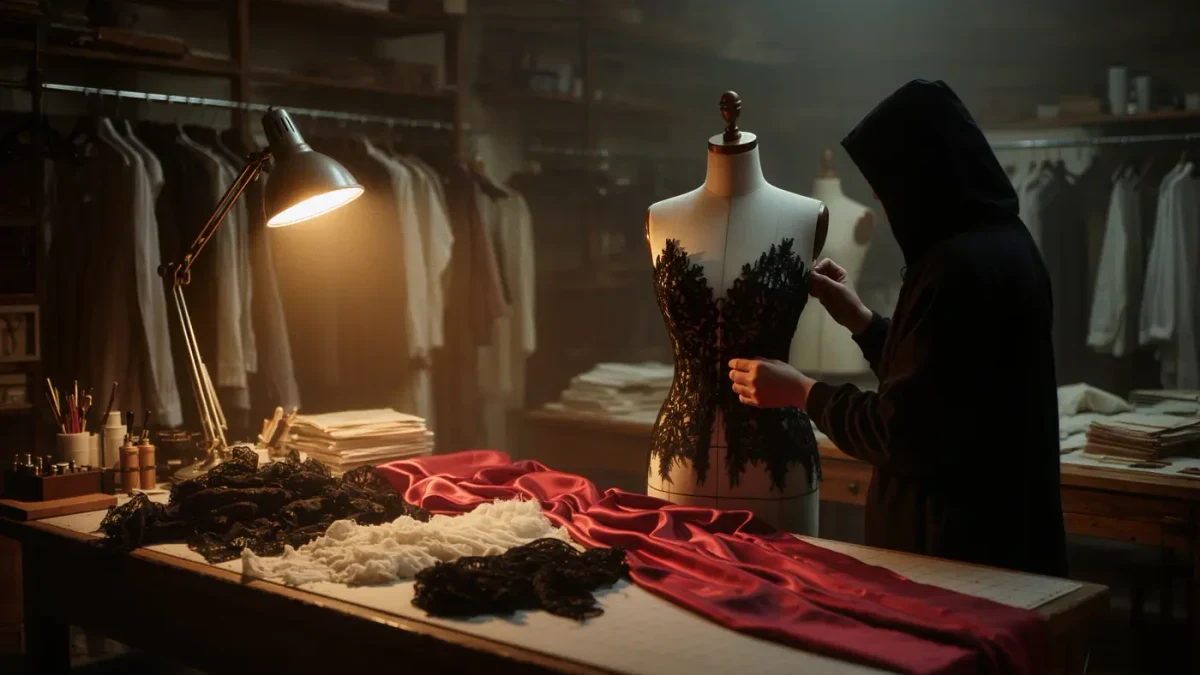
- Finish. Handwork mattered. Embroidery, feather work, and leather craft were pushed to levels closer to couture than to ready-to-wear production.
That is why his collections reward close viewing. From the back of the room, a look reads as theater. Up close, the seams tell a different story.
How did the art side and the craft side balance out?
Think of it as two engines. The art engine asked big questions: about nature, about history, about how fashion treats the body. The craft engine answered them in cloth. When one engine ran harder than the other, the work could tip. Early collections leaned toward provocation. Later ones, with the resources of a major house behind them, leaned toward polish and romance without losing the edge.
The balance shifted across his career, but it never disappeared. Even his most conceptual shows contained pieces a client could actually buy and wear. Even his most commercial pieces carried a trace of the darkness that made the name.
What this means for anyone studying fashion: the spectacle and the skill are not rivals. In McQueen's hands, each made the other legible. The drama gave the tailoring a reason to exist; the tailoring gave the drama a spine.
What is his legacy now?
The house continues under its own name, and his influence shows up across the industry in two directions. One is technical: designers who cut closer to the body, who treat tailoring as the foundation of everything. The other is attitudinal: the acceptance that a fashion show can carry meaning, mood, even discomfort, and that this is a legitimate use of the format.
He sits in a lineage of British designers who took subculture energy and forced the establishment to take it seriously, a story this desk has traced before in Vivienne Westwood: How Punk Became Haute Couture. He also belongs to the wider group of showmen who understood that fashion sells a story first, a thread later, a tradition that runs from Jean Paul Gaultier's French street couture to the dark glamour of Rick Owens. And his place among the greats is argued at length in The Most Influential Fashion Designers of All Time, Ranked.
Practical takeaways: what to watch for in a McQueen collection
Whether you are looking at archive pieces or the current line under its creative leadership, a few habits of the house are worth learning to spot.
- Look at the shoulder and waist first. The tailoring is the tell. If the cut is sharp, the piece is speaking the house's native language.
- Check the back. McQueen thought about the back of a garment as carefully as the front. Exposed spines, dropped waists, and dramatic back closures are recurring moves.
- Read the references. Nature, Scottish history, maritime imagery, and Victorian darkness appear again and again. The collections are arguments, not just outfits.
- Separate the show from the sell. Ask which pieces on the runway were theater and which were product. Both matter, but they answer different questions.
The evidence about his career, drawn from the public professional record, establishes one thing clearly: the shock got him noticed, but the craft is why he stayed noticed. What remains open for each new watcher is which side of the balance you find more compelling. We'll be watching how the house keeps both engines running at the next major collection.