Vivienne Westwood's influence on fashion is the story of a provocation that refused to stay young. She brought modern punk and new wave dress into the mainstream, then spent four decades turning that rebellious instinct into a design language built on tailoring, corsetry and history. According to Wikipedia's biography of the designer, Sky Arts ranked her the fourth most influential artist in Britain of the past 50 years in 2022 — a striking verdict for someone who began as a primary-school teacher.
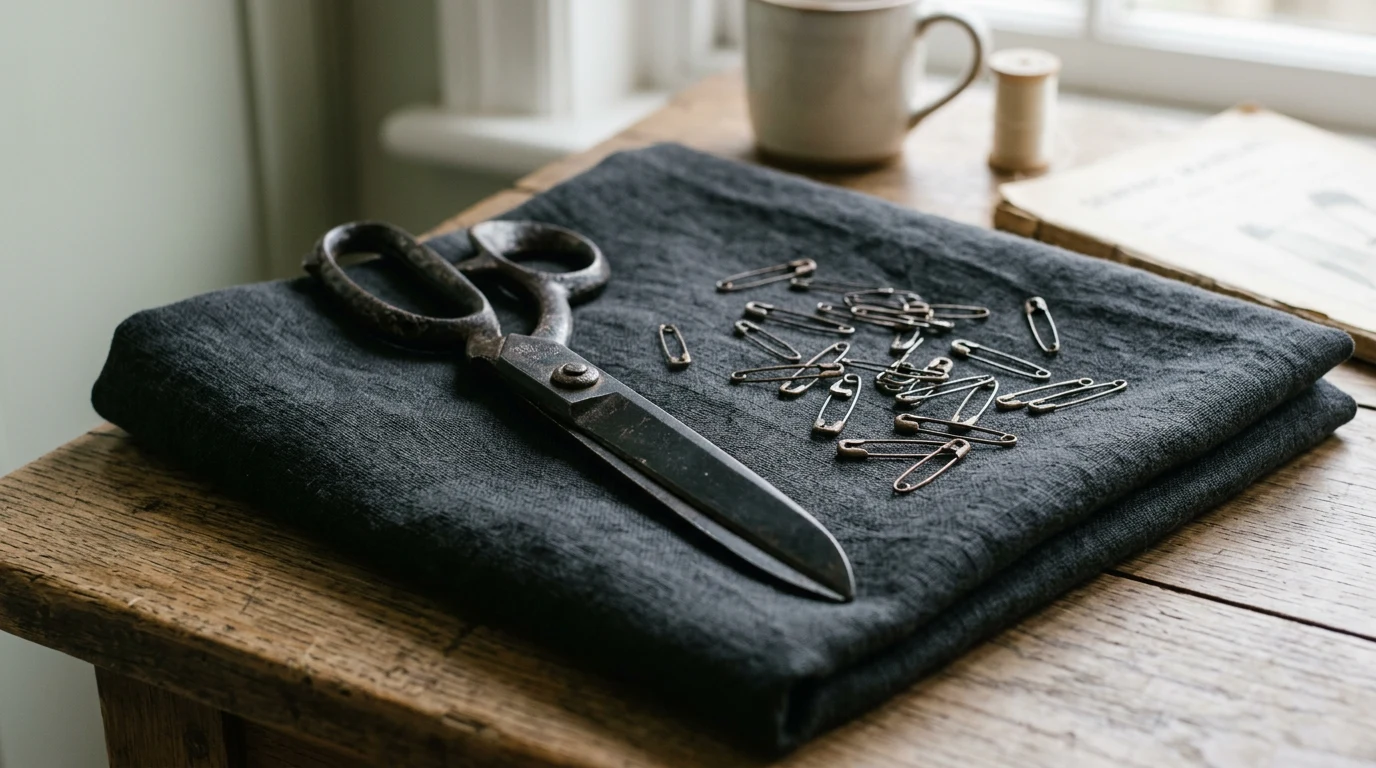
Her career answers a question the industry keeps asking: can subculture become institution without going soft? Westwood's record says yes, provided the argument never stops. The clothes that once put a spoke in the system now hang in museum exhibitions and sell on the house's own site, where the brand traces its heritage to the Rococo painter François Boucher. That arc — from safety pins to 18th-century painting — is the whole lesson in how vivienne westwood influence works.
This desk reads her as one of the few designers who changed what fashion is allowed to say, not just what it looks like. She belongs in any conversation about the most influential fashion designers of all time, and the reasons are worth unpacking. We covered a connected angle in The Most Influential Fashion Designers of All Time, Ranked.
Where did the punk story begin?
It began on the King's Road, in a shop that kept changing its name. Westwood and Malcolm McLaren opened Let It Rock in 1971, refashioned it as Too Fast To Live Too Young To Die in 1972, reopened as Sex in 1974, and later ran Seditionaries. The site remains a boutique to this day, trading as Worlds End since 1980, per the Wikipedia record of the designer's career.
The clothes matched the signage. Early pieces referenced 1950s Teddy Boy dress; the Sex era sold deliberately abrasive designs grounded in fetish imagery, made to provoke a comfortable middle class. When McLaren managed the Sex Pistols, the band wore Westwood's and McLaren's designs, and clothing and music moved as one. She described punk as a way of "seeing if one could put a spoke in the system."
The read: this was not styling borrowed from a street scene. Westwood was an architect of it, synchronising shop, sound and silhouette at the exact moment punk exploded in London.
How did provocation become craft?
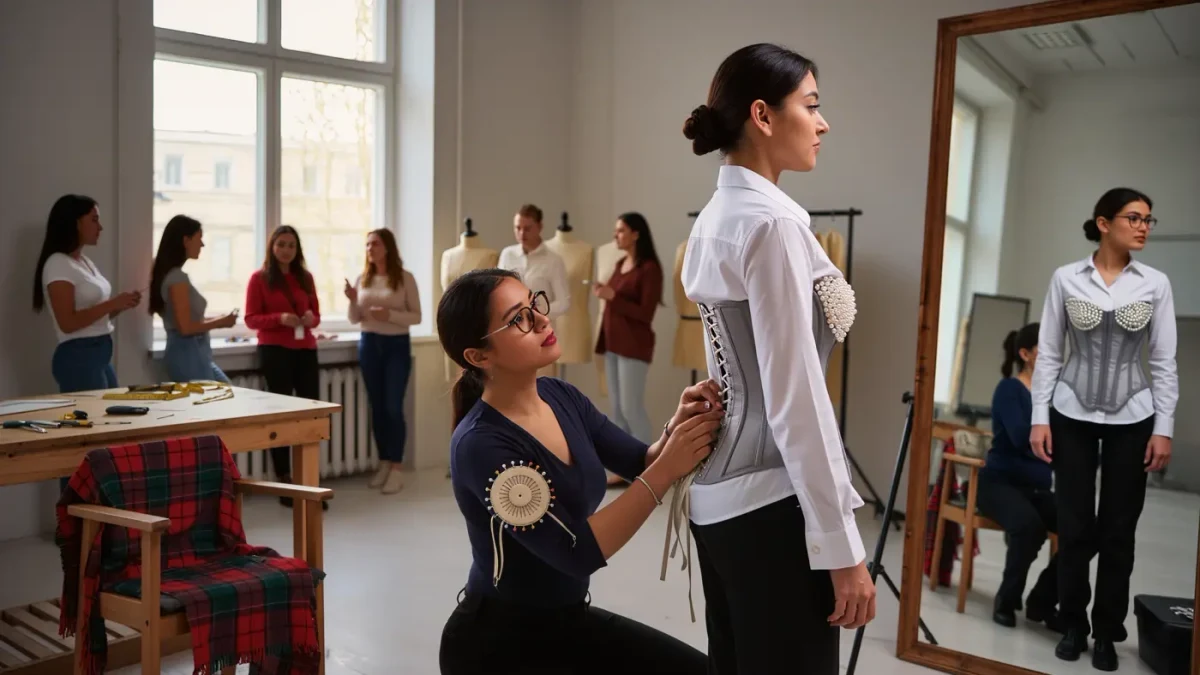
The turn came through history. Westwood's designs, during the punk era and after, were informed by historicism — the Victoria and Albert Museum has described her as "a meticulous researcher." She studied the cut of 18th-century stays, the drape of period skirts, the engineering of the corset, and rebuilt them for the present. Provocation gave her a voice; research gave her a vocabulary.
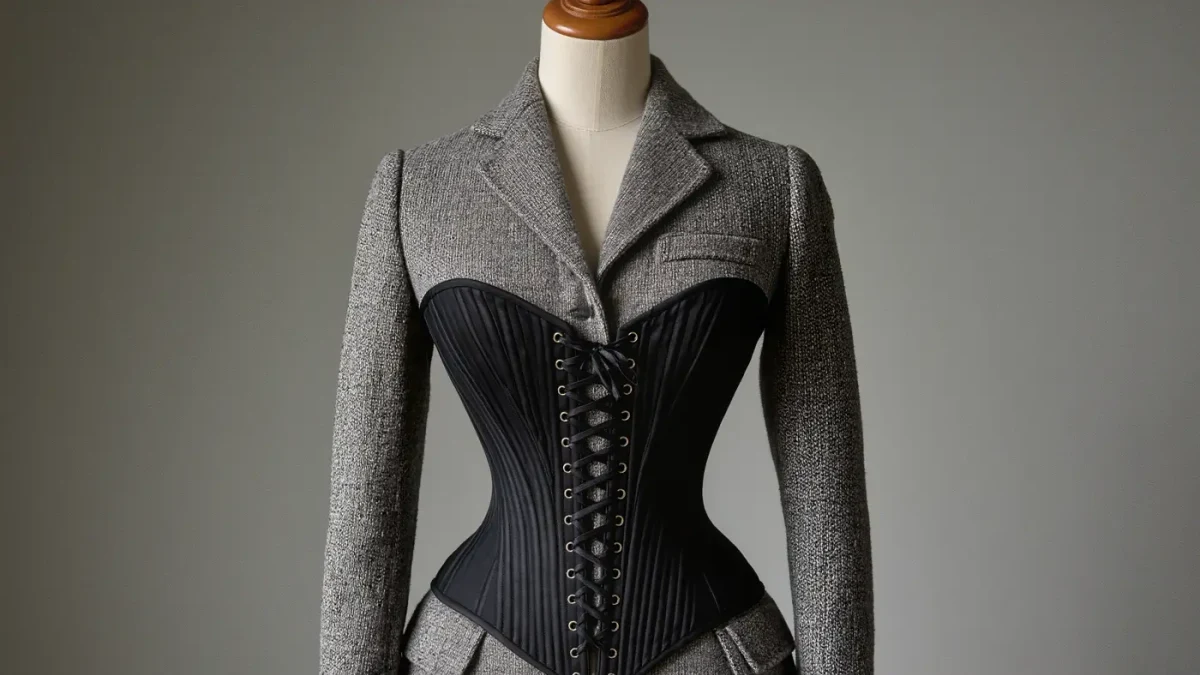
That pairing is her real signature. A Westwood garment argues with the past rather than quoting it: the lifted bust and compressed waist of historical corsetry, worn outside the clothes; the tartan and tweed of British tradition, cut at angles tradition never intended. The house itself frames this continuity, noting that Boucher's visual codes were woven into Vivienne's own means of expression, shaping her ideas of beauty and femininity.
Recognition followed the craft. She was named British Fashion Designer of the Year in 1990, 1991 and again in 2006, per the biographical record. The outsider had become the establishment's own honoree — without, notably, ever sounding like the establishment.
What can designers learn from her method?
Three lessons stand out, and they are practical rather than mythological.
- Research is a design tool, not homework. Westwood's historicism shows that a period reference lands only when you understand its construction. A corset copied looks like a costume; a corset understood becomes a cut.
- A signature can be an argument. Her houses codes were defiance, history and Britishness — ideas a customer could read at a glance. Compare how other houses codify identity, as in our piece on the three house codes that do a brand's talking.
- Subculture needs a shop floor. The boutique gave the ideas a place to be bought, worn and seen. Influence required commerce, not just attitude.
The same method — shock in service of craft — runs through the careers of kindred figures such as Alexander McQueen, whose balance of art, shock and craftsmanship we've examined separately. Westwood proved the model first. Readers following this should also see Alexander McQueen: Art, Shock, and Craftsmanship.
Why does her influence still matter now?
Because the tensions she embodied define the current industry. She was a designer and an activist in one career, selling merchandise that promoted causes including the Campaign for Nuclear Disarmament, climate action and civil rights groups, per the biographical record. Today every house weighs politics against product; Westwood simply never separated them.
She also modeled the working-class route into fashion — a jewellery and silversmith course she left after one term, a factory job, teacher training, a stall on Portobello Road — decades before the industry began discussing who gets to design. And her late-career dialogue with art history shows how a house can age without going quiet: the current heritage storytelling around Boucher treats a punk's archive as a museum-grade conversation with the 18th century.
Westwood died on 29 December 2022, aged 81, in London. The house continues under the leadership structure she built with her husband and collaborator Andreas Kronthaler, whom she married in 1993.
What this means for the season ahead
Our analysis: watch for the corseted waist, the off-kilter tailoring and the history-quoted-then-broken move to keep resurfacing, because they are no longer trends but inherited grammar. When a young designer pairs a period reference with a deliberate wrongness — a bias that shouldn't work, a hem that argues with the fabric — that is Westwood's fingerprint, whether the credit line says so or not.
The open question is institutional. Can a house built on dissent keep dissenting as it scales? The King's Road shop still stands at 430 Kings Road, a small answer in stone and paint. The larger one will be written by whoever inherits the archive and the nerve to use it.