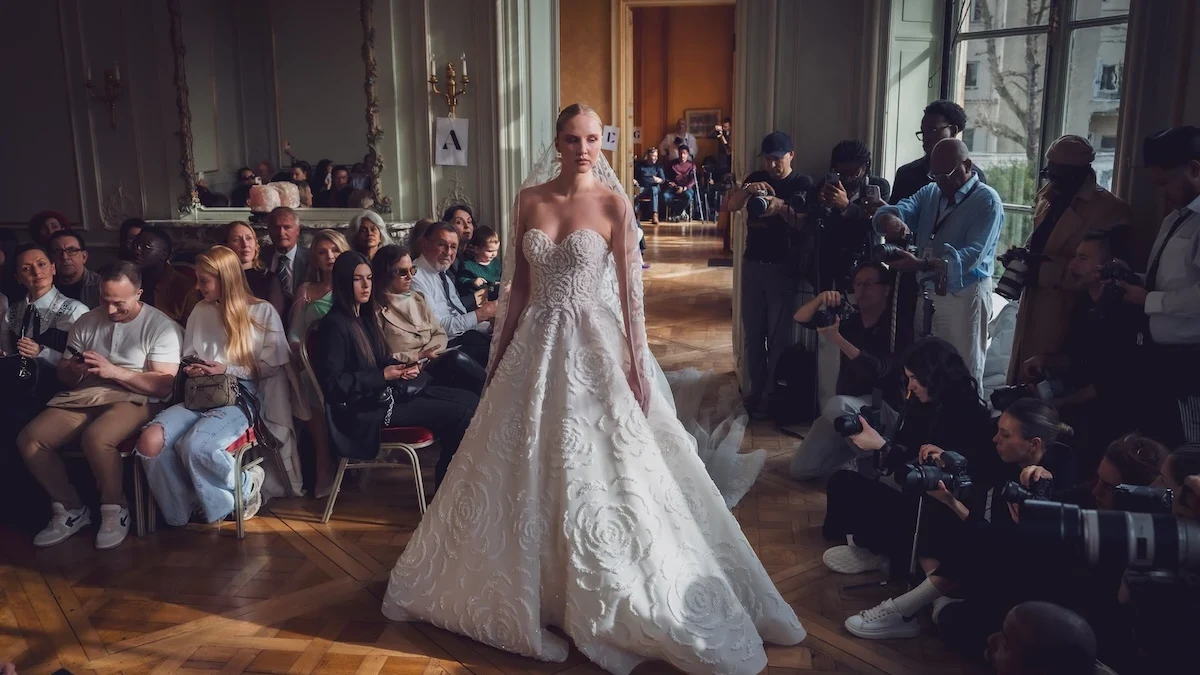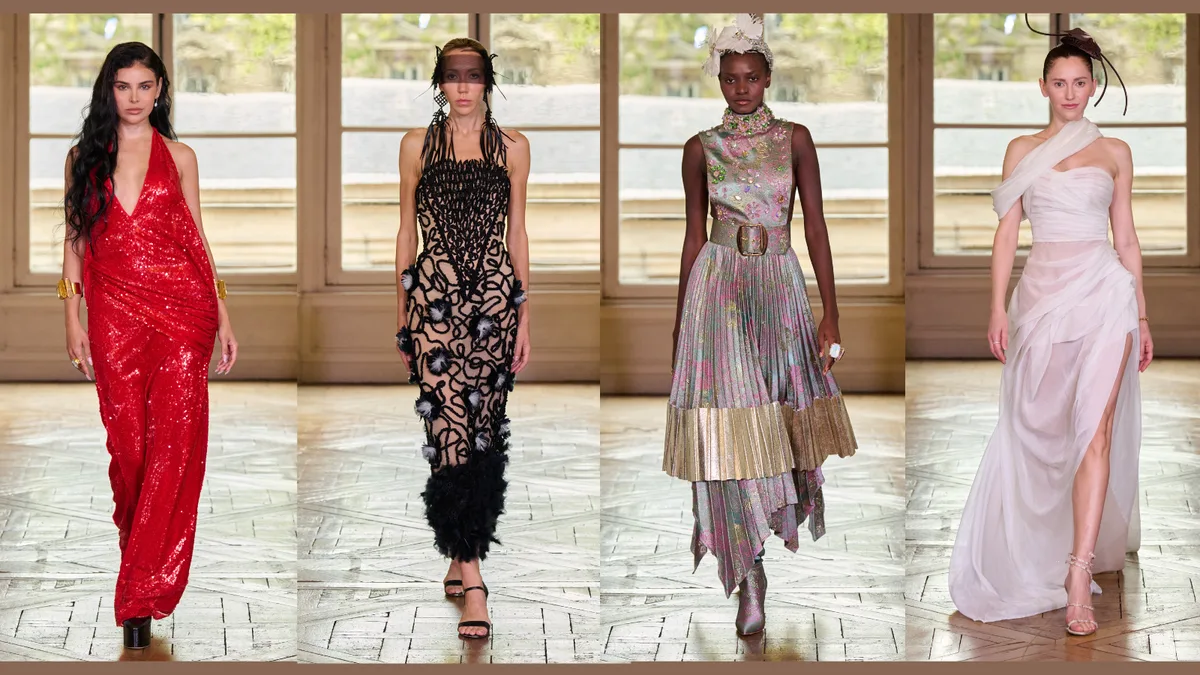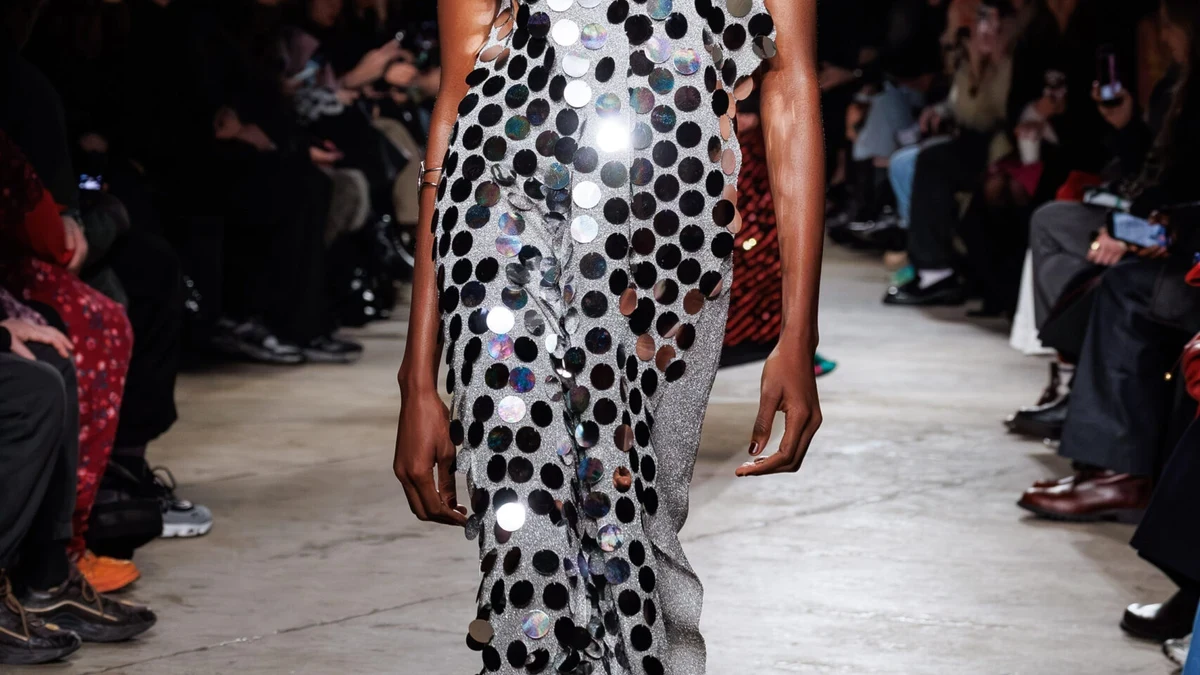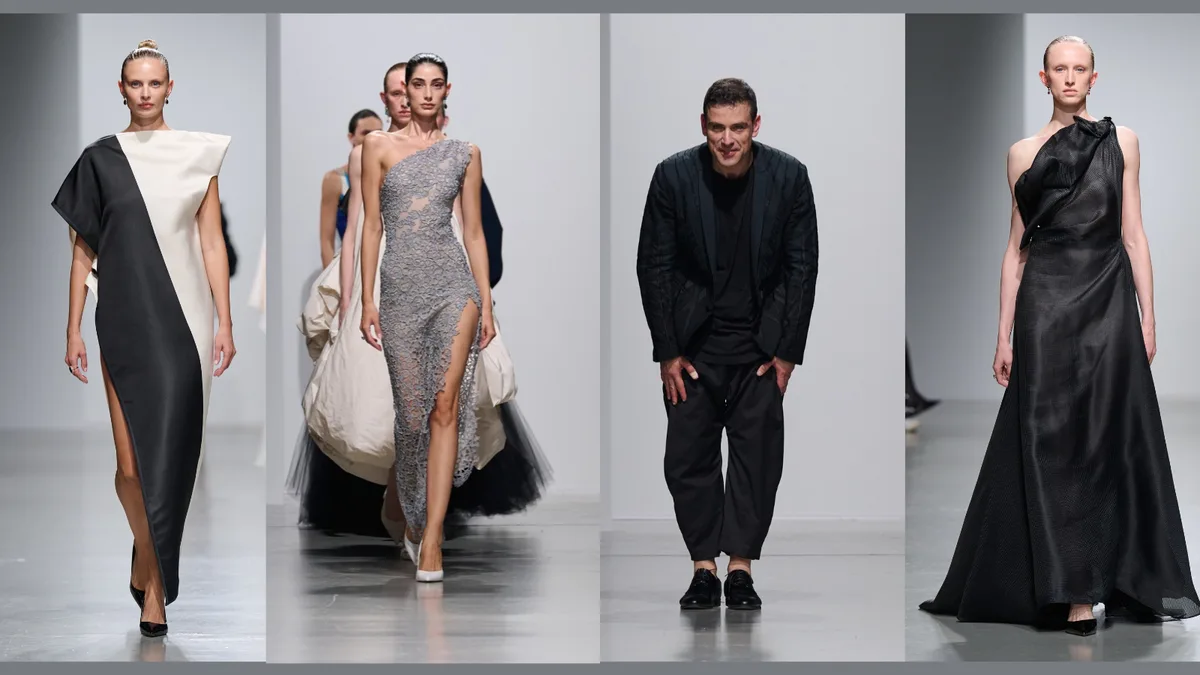
On September 29, 2026, the Palais de Tokyo in Paris became the setting for an important chapter in Rubin Singer’s creative journey. His return to Paris Fashion Week brought together architectural fashion, sculptural jewelry, original music, and an international production team in a presentation that extended far beyond the unveiling of a new collection.
Paris Fashion Week Spring/Summer 2027 witnessed the return of New York-based designer Rubin Singer, who presented his ready-to-wear collection HOMOMORPHISM at the Palais de Tokyo on September 29, 2026.
The occasion held particular significance for the designer. Rather than introducing an entirely new visual identity, Singer revisited the foundations of his established aesthetic and demonstrated how years of experience, technical knowledge, and personal memory could be transformed into a contemporary fashion statement. The presentation brought together the disciplines of fashion, jewelry, music, and live production. Each contributed to a unified creative experience that reflected both the designer’s history and his continuing evolution.
For Rubin Singer, whose background is rooted in a multigenerational European tradition of couture and garment making, the Paris presentation represented a meaningful return to one of fashion’s most influential international stages.
HOMOMORPHISM: The Art of Transformation
The title HOMOMORPHISM originated from mathematics, where the term describes a transformation that preserves an underlying structure. Rubin Singer translated this concept into fashion by exploring how familiar construction techniques, silhouettes, materials, and personal references could take on new forms without losing their essential character. His childhood memories, early experiences with ballet, and longstanding interest in movement and proportion influenced the collection’s creative direction. These references emerged through architectural construction, sculptural silhouettes, asymmetric draping, and carefully controlled tailoring. The collection incorporated denim, leather, and translucent textiles, using layered fabrics to create a visual relationship between revelation and concealment.
Black, ivory, white, and navy formed the foundation of the color palette, occasionally interrupted by unexpected accents. The result was a collection that balanced structural discipline with movement and expression. Rather than treating the past as something to reproduce, Singer used it as material for creative transformation.
As the designer expressed the underlying philosophy of HOMOMORPHISM: “The variables have changed. The structure remains.”
The statement captured the collection’s central idea: artistic evolution does not necessarily require abandoning the principles that define a designer’s work.
One of the notable artistic collaborations of the evening was the participation of American jewelry designer Jill Reno, founder of Jill Reno Collection. A second-generation artist with 26 years of experience in jewelry design, Reno brought a distinct sculptural dimension to the runway. Her work, recognized for geometric forms, bold proportions, and dramatic monochromatic combinations, complemented Singer’s architectural approach to garment construction. The jewelry featured precious metals including white, rose, yellow, green, and black gold, together with rare natural, earth-mined gemstones selected for their distinctive colors. Rather than functioning as secondary accessories, the pieces became an integral part of the overall runway compositions. The collaboration established a visual dialogue between fashion and jewelry, demonstrating how independent artistic disciplines could strengthen one another within a single presentation. Singer’s structured garments and Reno’s sculptural pieces shared a common emphasis on form, proportion, and the expressive possibilities of materials. Their combination contributed to the distinctive identity of the HOMOMORPHISM presentation.
An International Production Behind the Paris Presentation
The significance of the September 29 show extended beyond its creative concept. Its execution required the coordination of an extensive international production structure. More than 200 professionals participated in the project, including models, producers, casting specialists, hairstylists, makeup artists, showrunners, volunteers, and technical personnel. Bringing these departments together within the demanding schedule of Paris Fashion Week required careful planning, communication, and production management.
The organizational, technical, and creative production processes were coordinated by Valentina Varnavskaia, Ruslan Evseev, and Cesar Topaloff. Their work connected the designer’s creative vision with the operational requirements of the venue, runway presentation, backstage departments, and technical production teams. The successful coordination of these elements enabled the artistic concept to be presented as a complete live fashion production.
Mariia Anosova, serving as Casting Director, managed the selection of models and coordinated the casting process in collaboration with the production team. Her responsibilities contributed to the development of a runway lineup capable of presenting the collection’s varied silhouettes, proportions, and visual concepts. Casting formed an essential connection between the designer’s creative intentions and their physical expression on the runway.
Makeup and Hair Direction - beauty partnerships
The makeup direction for Rubin Singer’s Spring/Summer 2027 runway presentation was led by Fabiana Graziani, International Lead Hair & Makeup Artist and founder of The Backstage Team, whose extensive experience across the global fashion industry brought an exceptional level of expertise to the production.
Fabiana’s international career spans some of the world’s most influential fashion capitals, including New York, Paris, Milan, London, Miami, and Dubai. Her professional journey has taken her from major international Fashion Weeks to Miami Swim Week and Dubai Fashion Week, as well as the prestigious Cannes and Venice Film Festivals, where high fashion meets the international red carpet. Throughout her career, Fabiana has contributed to projects associated with renowned luxury and fashion houses, including Louis Vuitton, Bvlgari, Michael Kors, Oscar de la Renta, Missoni, and Roberto Cavalli. Her expertise extends beyond the runway to fashion campaigns, magazine covers, and editorial productions, with beauty work featured in leading international publications such as Vogue, ELLE, Grazia, L’Officiel, Harper’s Bazaar, and Marie Claire.
For Rubin Singer’s Paris presentation, Fabiana and The Backstage Team were responsible for translating the collection’s creative vision into cohesive runway beauty looks, ensuring that makeup complemented the designer’s architectural silhouettes and artistic direction.
The production also welcomed the participation of independent makeup artists Priynka Sharma, Michéle Magdić, and Faih Kotza, whose professional contributions further strengthened the international beauty team behind the show.
The project brought together an impressive selection of beauty brands, including La Bonne Brosse, CAIA Cosmetics, TRUSS Professional, Onerique Paris, and OPI France, highlighting the close relationship between the professional beauty industry and international fashion production. Together, the expertise of Fabiana Graziani, The Backstage Team, and the participating independent artists contributed to the visual identity of the presentation, demonstrating the essential role of beauty professionals in bringing a designer’s creative vision to life on the international runway.
International Hair Director Juan Lino led the hairstyling direction, working alongside independent hair specialist Zenzi Sebastini. Together, they developed and executed the hair concepts for the presentation, integrating hairstyling into the collection’s visual identity. The work of the hair and makeup teams contributed to the coherence of the final runway images.
Beyond the creative departments, the presentation depended on the precise coordination of backstage operations. The showrunner supervised the timing and sequence of the runway show, connecting the work of the various departments throughout the presentation.
The volunteer team, led by Yulia Krasik, supported backstage logistics, model movement, departmental communication, and daily venue coordination. Their contribution helped maintain the production workflow and supported the teams responsible for delivering the show.
Music formed another important component of the HOMOMORPHISM experience.
Vilde Tuv created the original music and audio concept for the runway show, contributing a distinct sonic dimension to Singer’s creative presentation. The relationship between music, movement, and fashion was especially relevant to a collection informed by the designer’s memories of ballet and his longstanding exploration of physical form.
The project also received support from Ulike, adding another brand to the network of participants involved in the production.
HOMOMORPHISM ultimately became a statement about preserving creative identity while continuing to evolve.
For Rubin Singer, the evening represented both a return to Paris and the beginning of another chapter in his work. For the designers, artists, and production professionals involved, it stood as an example of how international collaboration can bring a complex creative vision to the runway.
The September 29 presentation remains an important milestone in Singer’s fashion career and a notable moment of the Spring/Summer 2027 Paris Fashion Week season.
Photo: 1211pro