Quality in clothing is a set of checkable facts, not a mood, and the trade's own rulebook proves it. To earn the couture label in France, a house must run a Paris atelier with at least fifteen full-time staff members, per criteria the record dates to 1945. Craft at that level is audited. The rest of the market can be read the same way.
This guide turns studio standards into a shopper's checklist, and no couture budget is required. The tells that separate careful work from quick work sit on the inside of a garment, where nobody styles the surface. Each one traces back to how the trade trains its sewers. Check them in this order. This connects to our earlier piece, Christian Dior New Look — Christian Dior and the New Look: Why One Silhouette Still Rules Glamour.
Where should you start: the seams?
Start at the join. A seam is the place where two or more layers of fabric are held together with stitches, per the sewing record, and before the sewing machine every seam was made by hand. Mass-produced clothes now pass through computerized machines. Couture and tailoring still combine hand and machine sewing, per the same account.
The finish names the tier. A plain seam leaves raw edges inside its allowance, and ready-to-wear usually locks them with an overlock stitch, per the record. Couture closes them with bias tape. A French seam goes further: the raw edges are fully enclosed, sewn once, trimmed, pressed, flipped and sewn again. Turn the garment inside out and look. A planned inside usually predicts a durable outside.
What is hiding inside the cloth?
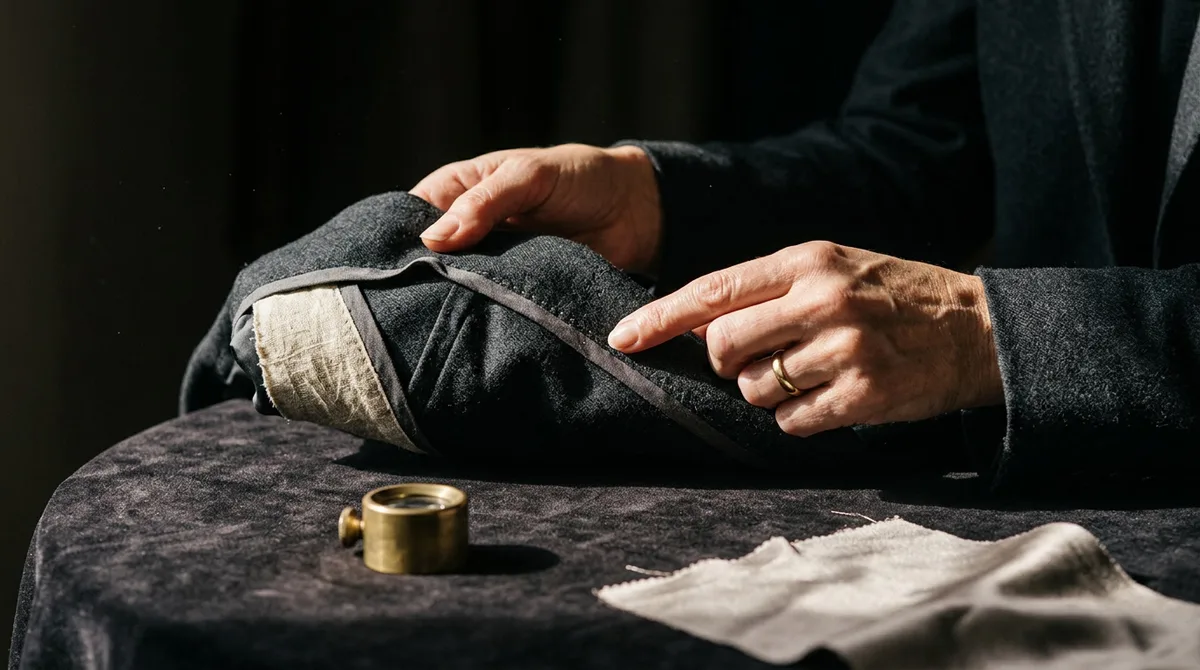
The next tell is structure you cannot see. Interfacing is a textile used on the unseen side of fabrics to make an area of a garment more rigid, per the record on that material. It stiffens collars and cuffs. It also keeps cloth from stretching out of shape.
The weights are matched on purpose. The heavier a fabric is, the heavier its interfacing, per the same entry, and a woven kind can match the grain of the outer cloth so both move alike. Squeeze a collar or a lapel. Firm but not stiff as card usually means someone made a decision there.
How does fabric weight change the read?
Weight is the third check, and it works with cut rather than against it. Paris built its couture trade on high-quality, expensive and often unusual fabric, sewn with extreme attention to detail and finished by its most experienced sewers, per the record of that industry. The cloth is the first expense and the first signal.
So test the hang. Hold the garment up and let it drop. Cloth that fights its own pattern will bag at the knee and pull at the shoulder. Cloth that agrees with the cut falls the way the designer drew it. Heavier fabric should come with a heavier structure inside, per the interfacing account, and when the two disagree, you are likely looking at a shortcut. For related coverage, see Designer Signature Styles: The Three House Codes That Do a Brand's Talking.
What do the couture rules tell the rest of us?
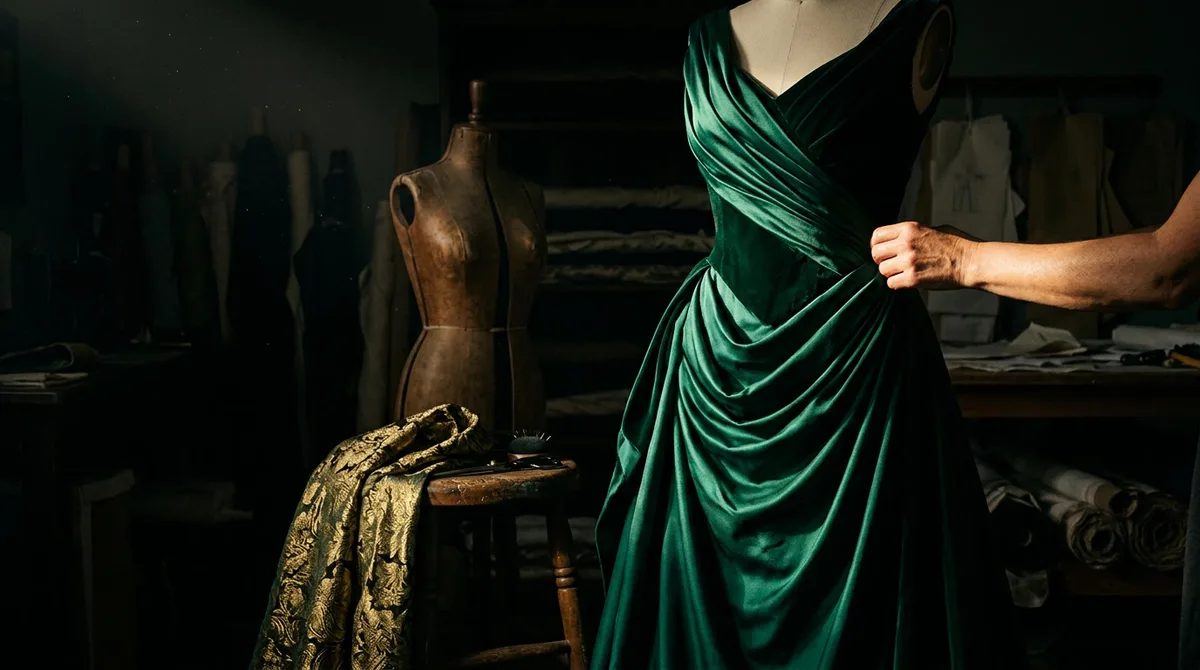
The 1945 criteria double as a shopping checklist, and the overlap is the point. A couture house must make each piece to order for a private client, with one or more fittings, per the record, and show at least fifty original designs each season, in January and July.
The read: fittings, structure and hand finishing all cost hours, and hours are what real prices pay for. You can borrow that standard anywhere. Check the seam finish, then let the cloth hang. If the inside is planned and the collar has a spine, the garment was built, not assembled.
Conclusion: what to watch on the next rack
Watch the inside-out photograph, because it is becoming a retail tell. The read: as buying moves to screens, houses confident in their construction have reasons to show their seams, and a brand that hides the interior is handing you a signal anyway. The test travels with you: enclosed edges, a collar with a spine. We will be watching which labels put their insides on display first.