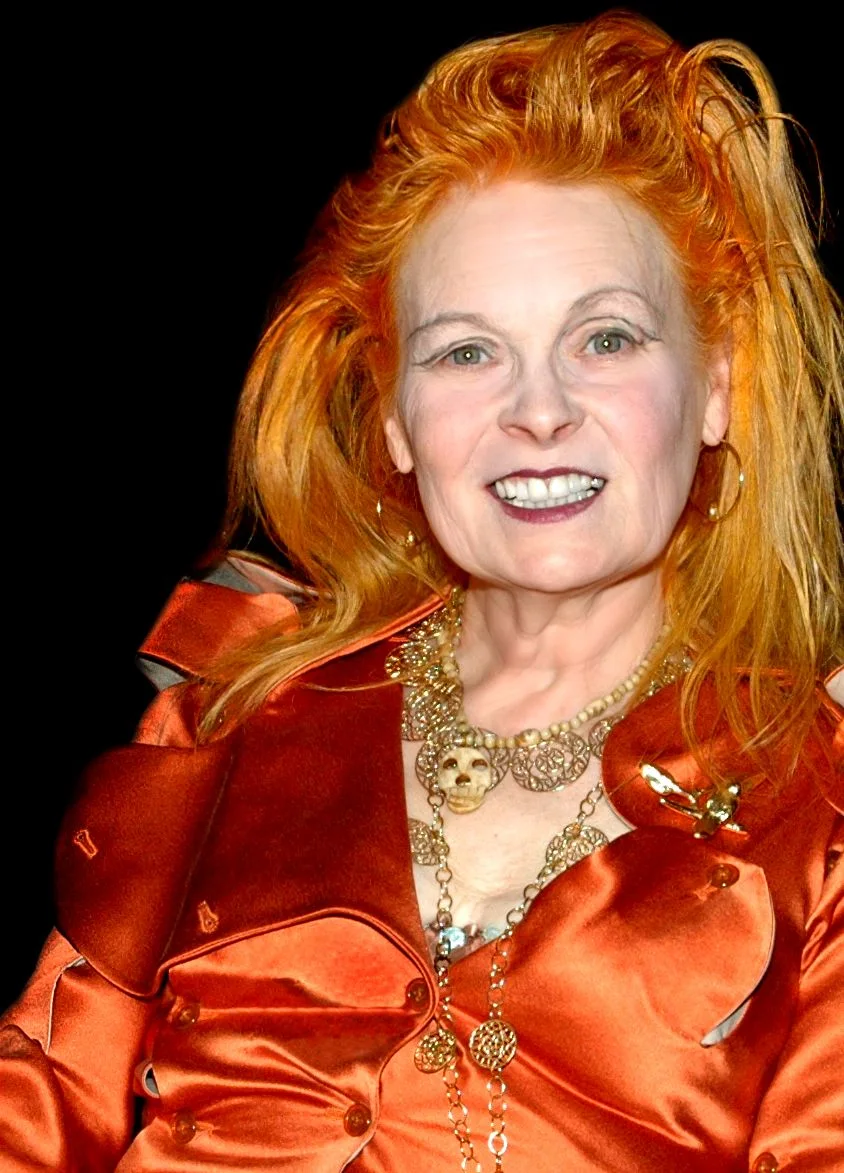
Vivienne Westwood turned punk into a fashion language and then spent four decades proving the language could speak in tweed. Born Vivienne Isabel Swire in Glossop, Derbyshire, in April 1941, she trained as a primary-school teacher, moved to Harrow, met Malcolm McLaren in 1965 — and in 1971 opened a shop at 430 King’s Road that would rename itself as fast as London youth culture moved: Let It Rock, SEX, Seditionaries, Worlds End.
How did punk become a runway?
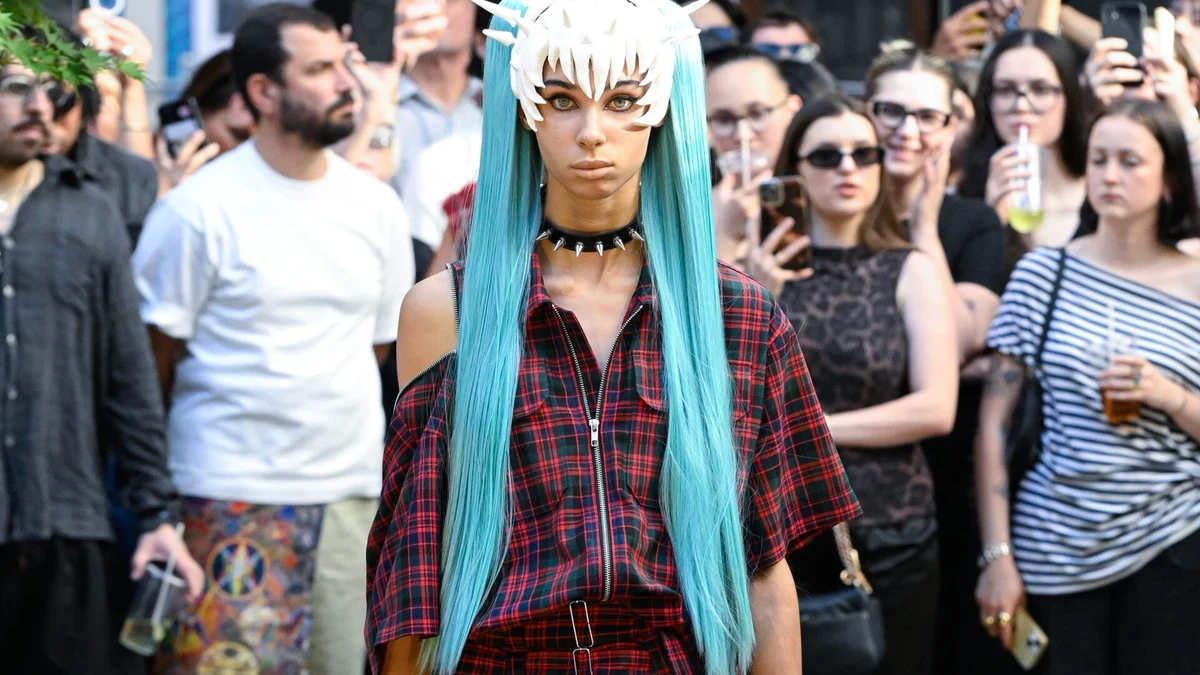
The shop dressed the Sex Pistols and the scene around them — safety pins, mohair, rubber, provocation — while McLaren supplied the soundtrack. Westwood cut the clothes, and the cutting was the craft: her versions of motorcycle jackets and bondage trousers gave the movement its uniform. When the Pistols ended, the clothes stayed, and the collection she called Pirate, shown in March 1981, is now cited as the moment British new romanticism began.
The read: she did not import punk into couture as a costume. She proved that a shop on a London side street could set the terms the Paris calendar would follow.
What are the Westwood codes?
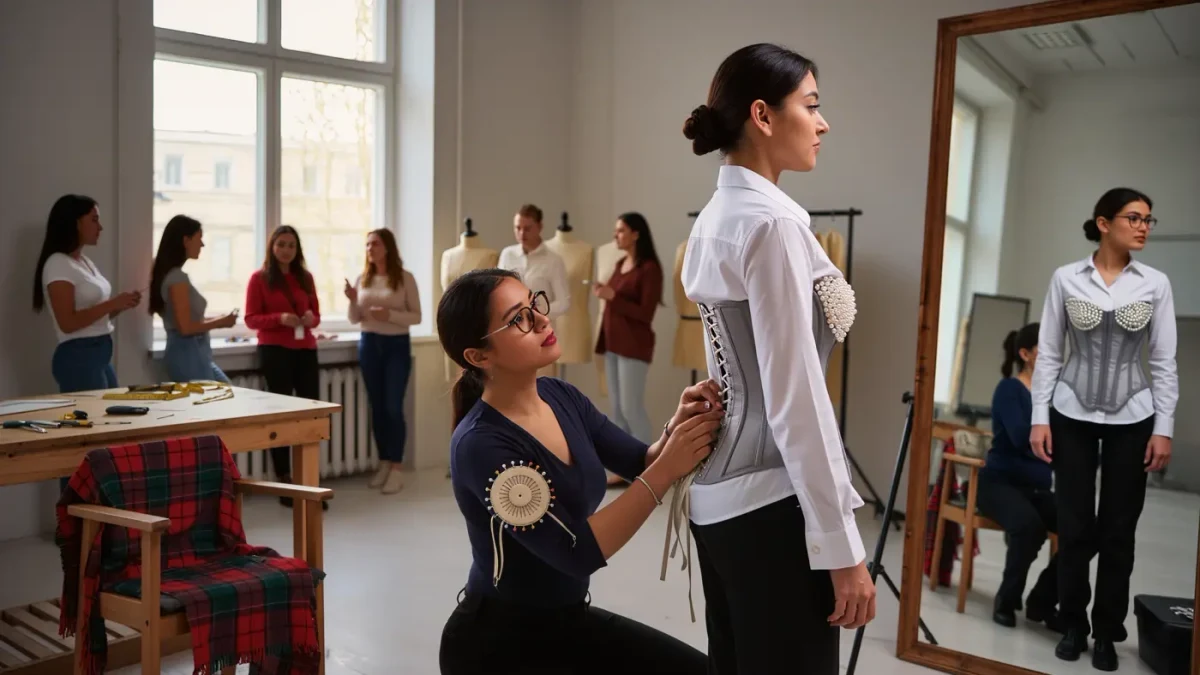
The mini-crini, her 1985 reinvention of the Victorian petticoat as a short, wired skirt, is the clearest signature — history corrected by mischief. The corsets rebuilt from historical pattern-cutting followed, along with Harris tweed taken to the tailors, the orb logo drawn in the eighties to mix the Sovereign’s Orb with Saturn’s rings, and a tailoring line whose shoulders changed the shape of British womenswear.
Her activism ran through the clothes, not beside them: cotton sourcing, climate campaigning, the Climate Revolution banner she carried to her own runway. In 2006 she was appointed DBE for services to fashion.
What does the house look like now?
Westwood died on 26 December 2022, at 81, in Clapham — the house announced it from the same channels she used in life. Andreas Kronthaler, her husband and design partner of thirty years, leads the creative work, and the collections continue under the name she built, with the activism embedded: the brand’s climate program and its charity partnerships carry the campaigning she put on the runway.
The read: the house treats heritage as permission. The archive supplies the corsetry, the orb, the tartan — and the activism that was never decoration.
What was the World’s End era?
The shop at 430 King’s Road became Worlds End in 1980, its clock running backwards, and the collections that followed were shown under the World’s End label: the Pirate collection of March 1981, the Savage collection, the Buffalo girls. The runway debut came without a press release, and the clothes were bought by the clubs before they were bought by the stores. The move to Paris came in the mid-eighties, when the British press could no longer keep up with what she was building.
The mini-crini arrived in 1985 — a Victorian petticoat cut to mini length — followed by the corsets built from historical pattern-cutting, the Harris tweed taken to Savile Row tailors, and the pivoting business of making history wearable. Her technique was self-taught on the job, and the cutting survived every trend cycle because it came from the pattern paper up.
What does the house stand for now?
The activism is institutional. The brand publishes its environmental program, sources its cotton through responsible farming projects, and gives the campaigning the same billing as the collections — the Climate Revolution banner Westwood carried in 2013 became the house’s standing position, and her slogan “Buy less, choose well, make it last” functions as the business model in a sentence.
Andreas Kronthaler, her husband and design partner since the early nineties, leads the creative work under the label Andreas Kronthaler for Vivienne Westwood, and the archive exhibitions — at the V&A in London, in Shanghai, in Beijing — keep the record in circulation for the students who now cut from her patterns.
What did she actually invent in the atelier?
The mini-crini of 1985 — a Victorian crinoline petticoat cut to mini length — is the clearest example of her method: she took a historical garment, removed its etiquette, and returned it as a challenge. The corsetry that followed used pattern-cutting from museum collections, re-built in modern stretch fabrics with the boning on the outside. The Harris tweed suits brought a Scottish mill back to life for a season. None of these were nostalgia: each took a garment with a known history and changed what it meant on a living body.
The tech: her shows pioneered the practice of pairing runway with music video — the 1990s shows were filmed and distributed like pop promos when the rest of the calendar relied on print. The house’s digital presence grew from that instinct, and the archive exhibitions now function as her runway retrospective.
The tailoring that followed the punk years is the part of her career the fashion schools now teach: the Harris tweed collected from Scottish weavers and cut into English jackets, the corsets pattern-cut from Victorian originals, the mini-crini that reframed a century of undergarments. Her runway collections carried titles that read as manifestos — Pirate, Buffalo, the Anglophilia collection — and the shows moved to Paris in 1983, where the French press gave her the status the London press had withheld.
The house’s business stayed independent — never sold to a group — and the campaigns ran the activism the designer believed: the Climate Revolution banner, the support for WikiLeaks, the logo reworked as a protest symbol. The read: Westwood proved that a house can campaign from the runway without losing the craft that justified the calendar slot.
Frequently asked questions
How did Vivienne Westwood enter fashion? Through the shop she ran with Malcolm McLaren at 430 King’s Road — Let It Rock, SEX, Seditionaries — dressing the London punk scene before showing her own collections.
What does the orb logo mean? The orb mixes the Sovereign’s Orb of the British coronation with Saturn’s rings — heritage and the future in one object, drawn for the house in the 1980s.
Who leads Vivienne Westwood now? Andreas Kronthaler, Westwood’s husband and longtime design partner, leads the house’s creative work, continuing its activism and its collections.