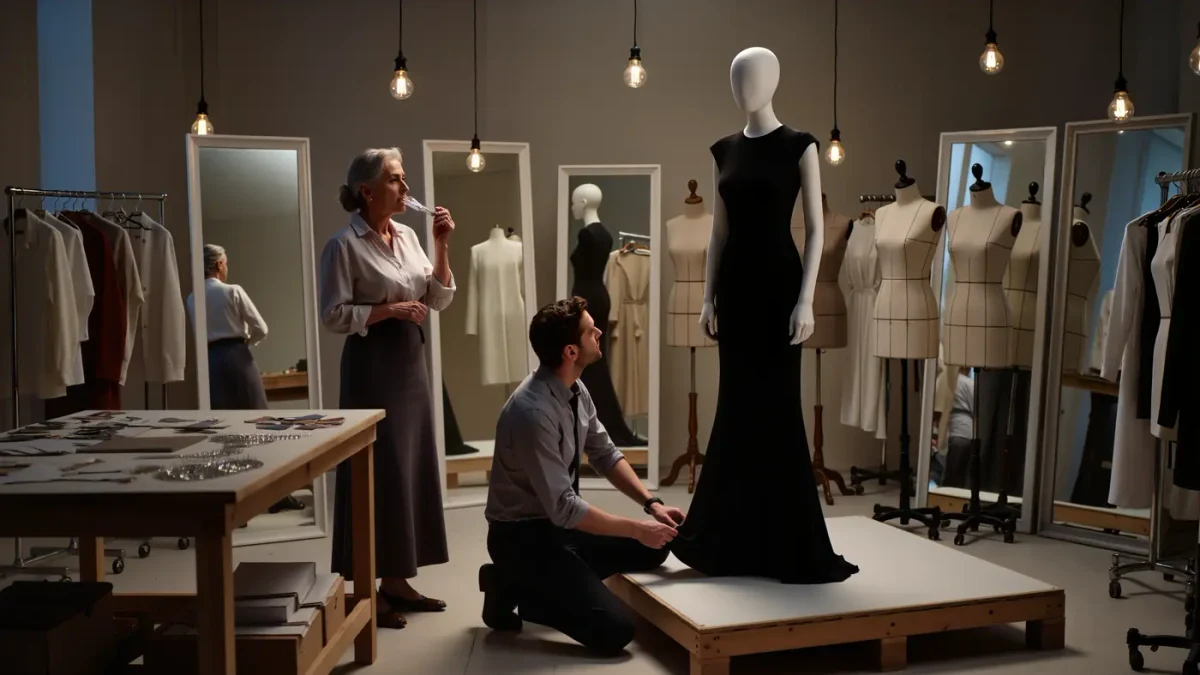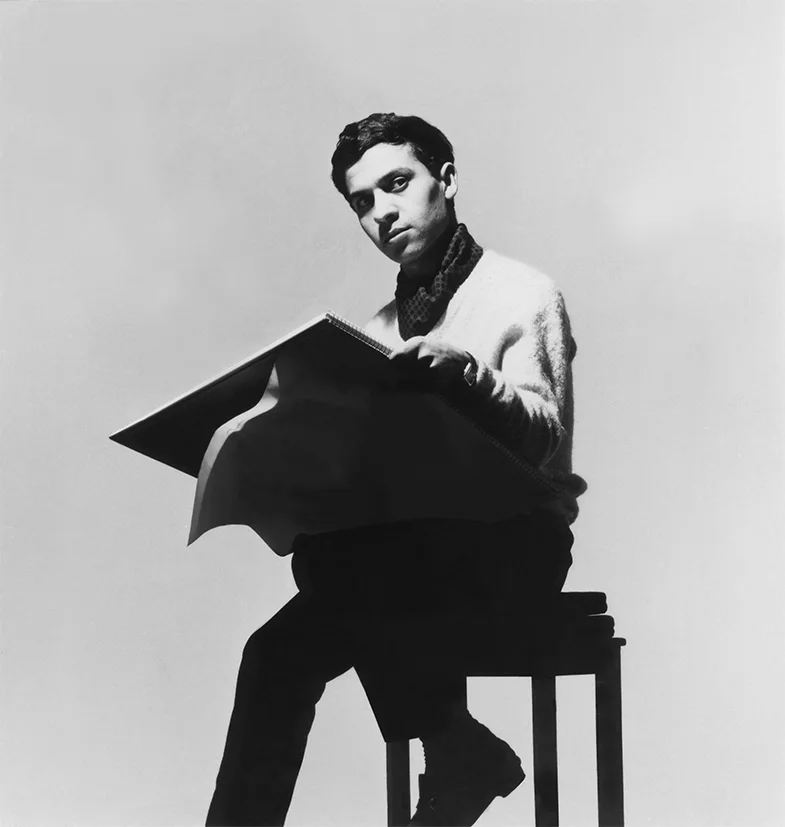
Azzedine Alaïa worked outside the Paris system by choice: no advertising, no seasonal obligations, shows held only when a collection was finished. The fashion world complained — then attended. Editors, models and clients flew to his atelier on the Rue de Moussai, where the Tunisian-born couturier fitted each piece on the body until it behaved like architecture, and the body-conscious wardrobe of the eighties and nineties was born in that room.
How did he start in fashion?
Alaïa was born in 1935 in Siliana, Tunisia, to a farming family, and studied sculpture at the École des Beaux-Arts in Tunis — a training that explains everything about how his clothes hold a body. The couturière who employed him introduced him to her clients, and through them he moved to Paris in 1957, at the height of the couture system he would eventually stand apart from.
The apprenticeships were formal: two years at Guy Laroche, two at Thierry Mugler, and private commissions throughout — dressing the Countess Nicole de Bléhaut and the society clients who came to his flat at night for fittings that ran past midnight.
What is the Alaïa signature?
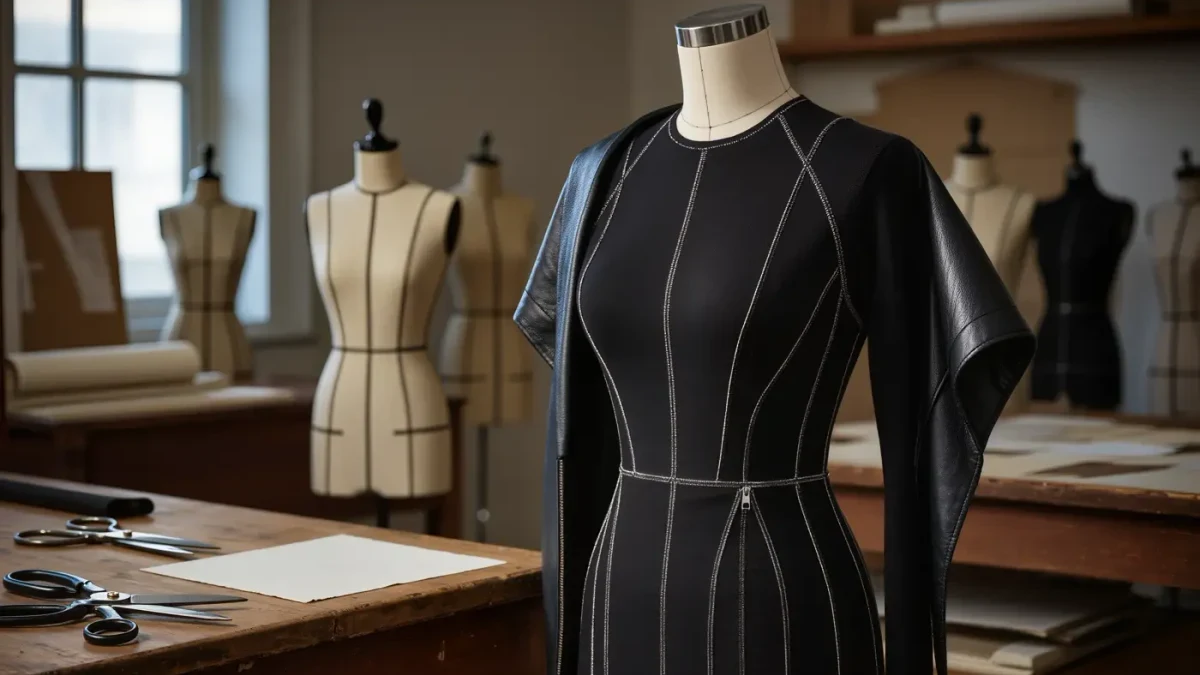
The bandage dress of 1985 — bonded strips of stretch knit that hold the body like built architecture — is the piece that made his name, but the method is the real signature: every garment cut on the body, nothing left to chance, no pattern repeated without being re-fitted. He studied sculpture formally, and his clothes behave like it: volume, tension and the line of a shoulder treated as drawing.
The clients became the archive — Grace Jones, Tina Turner, Madonna, Louise de Vilmorin — and the house never advertised, because the fittings were the advertising.
What does the house look like now?
Alaïa died in Paris in November 2017, and the house passed to the Swiss group Richemont, which preserved his ateliers and archive intact. The Azzedine Alaïa Foundation, housed in the building he designed himself on the Rue de Moussai, opens his studio to students and exhibitions — the courtyard, the marble table where he fitted, the library of his reference books.
The read: independence here was not a marketing position but a working condition. The house that refused the calendar produced collections the calendar is still catching up to.
What were the private-client years?
Before the fashion world knew his name, Alaïa dressed the private clients who came to his flat at night: the Countess Nicole de Bléhaut, whose commissions gave him the freedom to refuse work he did not respect; the editor Louise de Vilmorin, who introduced him to the literary salons of Paris; the actress Arlette Gordon. The fittings ran past midnight, on the body, in front of a mirror he positioned himself — a method he never abandoned, even at the height of the house’s success.
The houses he trained in taught him the trade he would later refuse: Guy Laroche for two years, Thierry Mugler for two — and in between, the private atelier where he learned that a garment’s truth is in the fit, not the sketch. The bandage dress of 1985 — bonded strips of stretch knit that hold the body like built architecture — is the piece that made his name, but the method is the real legacy.
What is the foundation doing?
The Azzedine Alaïa Foundation, housed in the Rue de Moussai building where he lived and worked, opens his atelier to exhibitions and to students — the marble fitting table, the mirror he positioned, the library of his reference books preserved as they were. The house’s archive of garments, sketches and toiles is available to researchers, and the exhibitions have traveled to museums from Paris to Tokyo.
The read: the house that refused the calendar produced collections the calendar is still catching up to, and the foundation makes the refusal legible as a method — a couturier who worked because the work demanded it, not because the season required it.
Who were the clients who made him?
The private clients were the house’s first runway: Louise de Vilmorin, the writer whose literary salons introduced him to Paris’s cultural aristocracy; Arlette Gordon, the socialite who commissioned entire wardrobes; Greta Garbo, who visited the atelier incognito. The fittings ran past midnight because the couturier worked when the work demanded it — and the clients came because the clothes fit like nothing else in Paris.
The ready-to-wear business that followed kept the method: each piece fitted on the body, no pattern repeated without a re-fitting, no collection released until the clothes were right. The 1980s made his name — the bandage dresses worn by the era’s supermodels, the stretch bodies that treated the figure as architecture — and the fashion world’s complaints about his schedule became proof of his independence.
The read: the house’s method — fit on the body, release when ready — is the working legacy of a couturier who treated independence as a craft discipline.
What is the house’s place in fashion history?
The houses that refused him taught him the value of independence, and the clients who trusted him taught him the value of patience: Alaïa never advertised, never licensed his name to a product he had not touched, and never showed a collection before it was finished. The fashion world’s complaints about his schedule were the industry’s problem, not his — and the archive now proves the point: the garments hold the body as well in 2026 as they did in 1985, because the construction was never rushed.
The read: Alaïa’s career argues that the most radical schedule in fashion is simply finishing the work — and the Foundation’s library, atelier and archive make the method available to the students who will inherit it.
Frequently asked questions
What is Azzedine Alaïa known for? He is known for sculptural, body-conscious knitwear and tailoring, cut with architectural precision on live models rather than to a seasonal calendar.
Who owns the Alaïa house today? Alaïa is owned by the Swiss luxury group Richemont, which maintains the ateliers, archive and the Azzedine Alaïa Foundation in Paris.
What is the bandage dress? A garment Alaïa developed in the mid-1980s from bonded stretch knits — a construction so exact it became the era’s defining silhouette and the house’s continuing icon.