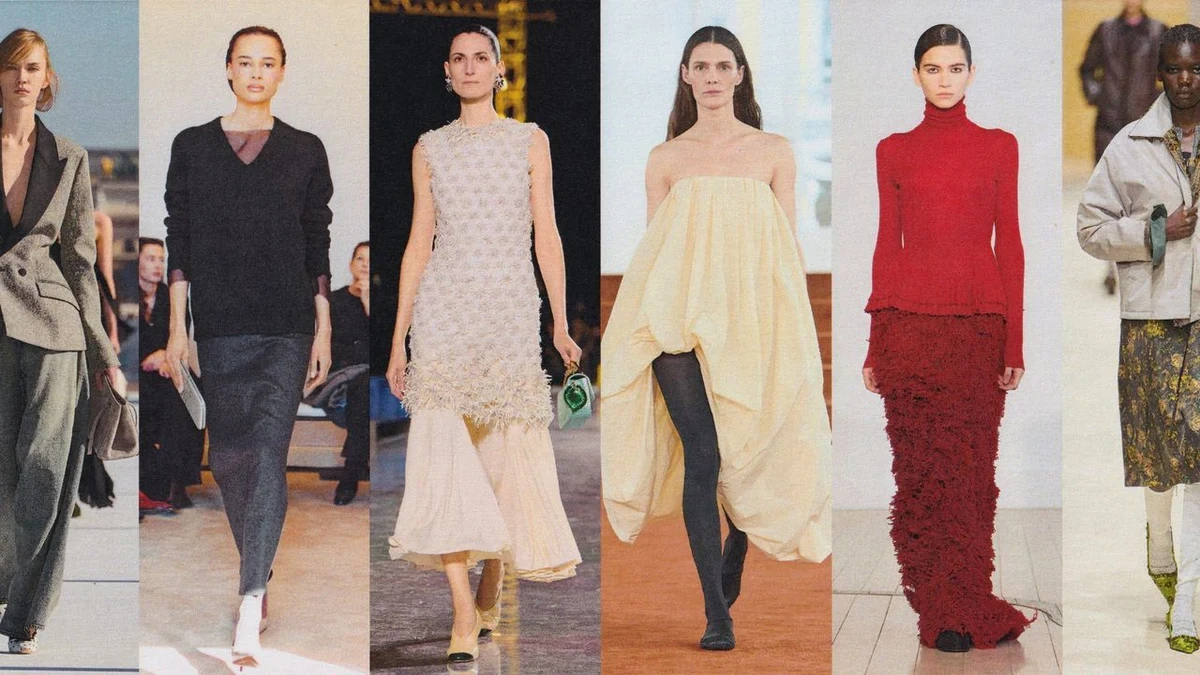
A look walks the runway once. Then the real sorting begins. Editors file reviews, buyers take notes, stylists screenshot, and within days a season's worth of work has been divided into the pieces that will be written about again and the pieces that will quietly vanish. That sorting is done by fashion week news as much as by the clothes themselves.
This is the part of the industry most shoppers never see. A collection is not a product line. It is a proposal, and coverage is the mechanism that turns a proposal into a trend. Understanding that loop changes how you read a review, a front-row photo dump, or a single viral look — and it helps you spot which trends will actually reach a store near you.
Our analysis: the runway sets the menu, but media coverage picks the specials. Here is how that feedback loop works, stage by stage, and what it means for what lands in your closet.
What actually happens after the show ends?
The lights come up, the models clear out, and the work moves indoors. In the hours after a show, three groups act on the same collection in three different ways, and their reactions shape everything downstream.
- Editors and critics file reviews on deadline. A review is an argument: what the collection said, whether the designer said it well, and where it sits in the season's conversation. One strong review can reframe a show that looked uneven in the room.
- Buyers from department stores and boutiques work through showrooms and appointments. They order pieces for real racks, in real quantities, months ahead. Their choices, not the runway order, decide what a shopper can physically try on next season.
- Stylists and image-makers flag looks for fittings, premieres and campaigns. A single well-chosen red carpet moment can give a runway look a second life its designer never planned.
Each group feeds the others. A lauded review makes a buyer's order easier to defend internally. A buyer's order makes a piece more likely to appear in stores, which makes it more likely to be photographed on the street, which makes it more likely to be covered again. That is the loop in its simplest form.
Why does one look go viral while the rest of the collection disappears?
Social platforms have compressed the feedback loop from months to hours. Where a review once had a week to set the narrative, a single look can now dominate the conversation before the next show starts. The mechanics are worth understanding, because they reward different things than a traditional review does.
A look goes wide when it is legible at a glance: a dramatic silhouette, an unexpected pairing, a shoe or bag that reads even in a cropped clip. A collection's quieter achievements — a fabric weight, a finish, a cut that only reveals itself in motion — rarely survive that filter. The danger is that the viral look becomes shorthand for the whole season, and the subtler work that buyers actually ordered gets written out of the story.
The read: virality is a spotlight, not a verdict. It tells you what photographed well, not necessarily what will be worn. We watch which viral looks reappear in editorial shoots and store windows a season later; those are the ones the loop actually carried forward.
How do reviews influence what stores order?
Buyers place orders long before a customer sees anything, and they work under pressure. A collection that coverage has framed as the season's story is easier to buy into, because the store can count on demand being primed. A collection the press ignored needs a buyer with conviction, because the store will have to build the demand itself.
This is where coverage has real money attached. When reviewers converge on a theme — say, a season where many houses turn toward color after years of pared-back minimalism — that convergence becomes a commercial signal. Retailers plan windows, marketing and markdowns around it. The trend stops being an opinion and starts being a forecast.
It cuts both ways. Coverage can also kill a trend early. If the press collectively declares a look overdone, buyers trim their orders, stores under-merchandise it, and the trend starves on the rack regardless of whether shoppers would have bought it. The desk has watched this pattern repeat enough times to treat any "this is over" consensus with suspicion — the reader often arrives after the press has moved on, which is exactly when the pieces finally hit the sale rack.
What should a reader actually take from fashion week coverage?
Read it in layers, and read it skeptically. Here is a practical way through a season's worth of headlines.
- Separate the show from the story. A review tells you what a collection means; the lookbook and runway footage tell you what it is. Check both before forming an opinion.
- Count the repeats. One house showing a sharp shoulder is a signature. Five houses showing it is a trend. Coverage that names the pattern across houses is more useful than coverage of any single show.
- Watch the commercial follow-through. The surest sign a runway idea will reach you is when it shows up in pre-collection lookbooks and retailer edits months later. That is the loop closing.
- Distrust the instant verdict. A look that dominates the first 24 hours is not automatically the look of the season. Give the coverage a week to settle before deciding what mattered.
There is also a local angle worth noting. Coverage is not only a Paris-and-Milan affair; regional weeks build the same loop at a smaller scale, and they need press attention to attract the buyers and sponsors that keep them alive. Our own coverage of Florida Men's Fashion Week's fifth season in Miami made the same point from the ground: a regional scene grows when its shows are written about, not just attended. We covered a connected angle in Florida Men’s Fashion Week’s Fifth Season Put Miami Menswear Back on the Runway Map.
How is the loop changing right now?
Two shifts are worth tracking. First, the line between coverage and the show itself is blurring. Houses now stage moments with the clip in mind, and some shows are effectively built as media events first, collections second. Our review of how Louis Vuitton turned Paris menswear into a social-video moment traced that logic in real time — the staging was designed to be covered. Readers following this should also see Louis Vuitton SS2027 Turns Paris Menswear Into a Social-Video Moment.
Second, retail is pulling the runway closer. Launch events, pop-ups and in-store presentations now borrow the language of a show, so the coverage loop no longer waits for a fashion week to spin up. We looked at how June's fashion launches turned retail into a runway event, and the pattern is clear: the moment a store can generate its own coverage, the traditional calendar loses some of its gatekeeping power.
Neither shift removes the critics or the buyers. Both still matter. But the path from runway to rack is no longer a straight line through the review pages, and readers who understand the detours will spot the real trends earlier than the headlines do.
Where does this leave the shopper?
The evidence here points to one conclusion: fashion week news is not a report on trends. It is a participant in them. The reviews, the clips and the buyer orders form a system, and what you find in stores next season is the system's output, not the runway's.
What remains unknown is how far the loop can stretch. If houses keep designing for the clip, and stores keep staging their own shows, the question is whether the quieter craft — the cut, the fabric, the finish — can still find its audience through coverage, or whether it will need a different channel entirely. That is the thing to watch at the next round of shows: not which look went viral, but which quiet idea the coverage system managed to carry through anyway.